Pattern 28 / SCALE

Load Balancing

Use this when spreading incoming requests across healthy backends.

Pressure
Spreading incoming requests across healthy backends
Mechanism
Route each request to an instance using round-robin, least-connections, weighted, or sticky algorithms
Toll
Health checks, uneven workloads, stickiness, and overload handling matter
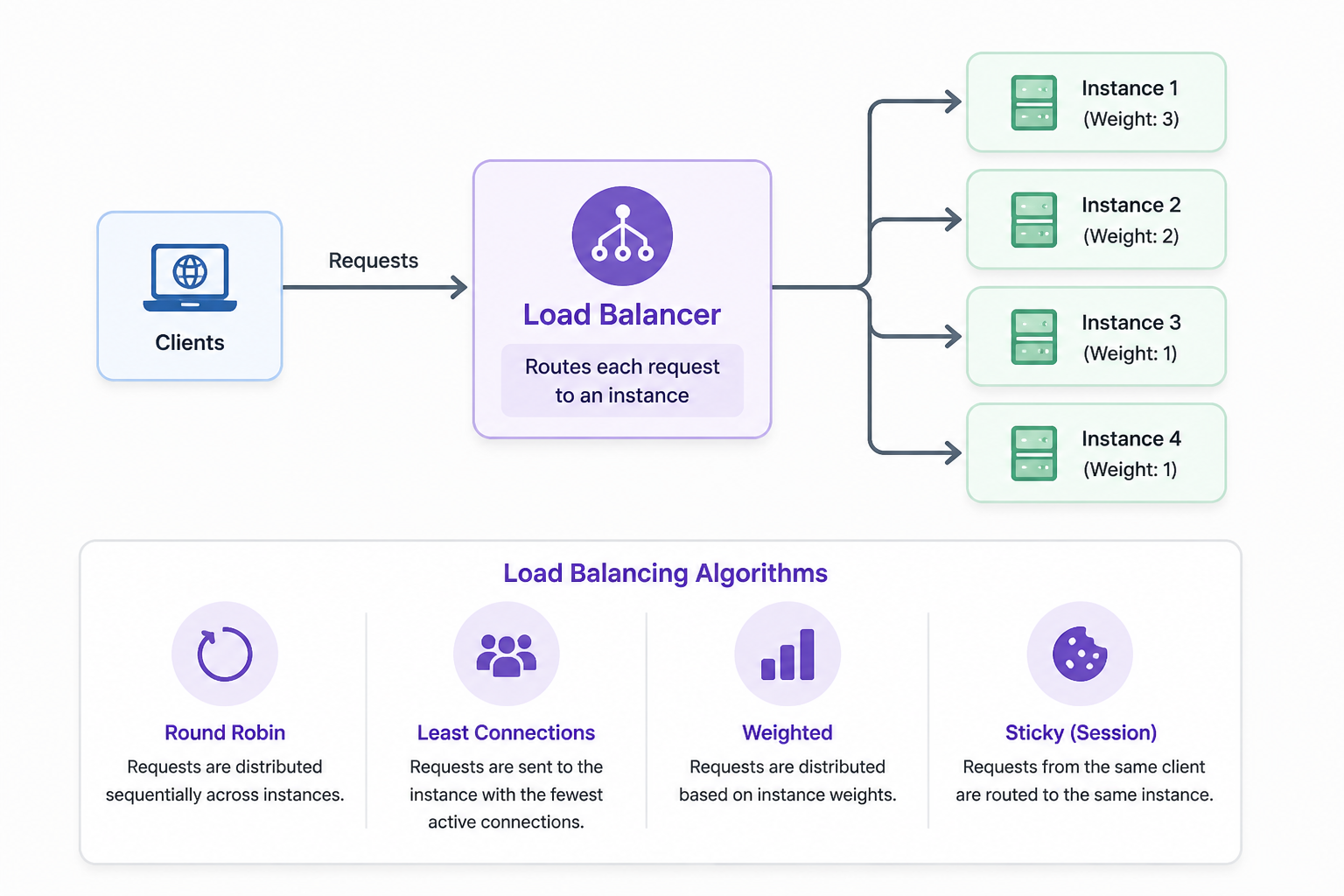
Architecture plate28
Diagram for Load Balancing
Executive brief

Load Balancing fits when spreading incoming requests across healthy backends. Mechanism: route each request to an instance using round-robin, least-connections, weighted, or sticky algorithms. Use it for nearly every horizontally scaled web/API service. The toll: health checks, uneven workloads, stickiness, and overload handling matter.

Use when

Nearly every horizontally scaled web/api service.

Example

Traefik routing https traffic to multiple app containers.

Review framing

Describe the pressure first, then the mechanism, then the cost. That keeps the design grounded.

Same pressure family

Scaling Patterns

26Horizontal Scaling27Vertical Scaling29Auto-Scaling30Database Connection Pooling
โ† 2729 โ†’